Monday, November 12, 2012

Orwellian Freedom: Green Party Platform (Part II)

[Ed. note: Part I on Monday examined the Green Party's Green New Deal; today's post examines the rest of the Green Party's platform with energy and the environment. With Obama's reelection, it should not be forgotten that the philosophy and positions below--although not feasible for wholesale implementation--remain end-states for John Holdren and other Administration officials].

In George Orwell’s novel Nineteen Eighty-Four, published in 1949, the Ministry of Truth had three slogans: “WAR IS PEACE,” “FREEDOM IS SLAVERY,” and “IGNORANCE IS STRENGTH.” Enter the deep-ecology agenda, which is about controlling your resources and your life in the name of freedom for spaceship Earth.

Imagine Green Orwellian Freedom. Some of us would work in the public sector as green planners. More would work for government as enforcers, making sure the private sector is acting “sustainably.” In a quasi-police state, the more green would belittle and tattle on the less green for fun and profit.

Private property rights will be blurry in the name of promoting the common green good.

Platform Language

Long sections of the Green Party platform present positions that activate the coercive power of government. The broad view of “sustainability” and “justice” is behind such directives such as Just Say No to Urban Gas Drilling.

The major areas reproduced below are Environmental Justice, Ecological Sustainability, Climate Change, Energy Policy, and Nuclear.

“Environmental Justice”

The opening, long plank, Environmental Justice, is seen as an attraction-getter for the rest of the Green agenda:

The Green Party supports a holistic approach to justice, recognizing that environmental justice, social justice and economic justice depend on and support each other. We believe that no one — including people of color and the poor — should be poisoned nor subjected to harmful levels of toxic chemicals and that no group of people should bear a disproportionate share of the pollution from industrial, governmental and commercial sources or policies.

Across the United States, the poor and people of color do suffer disproportionately from environmental hazards in the workplace, at home, and in their communities. Inadequate environmental laws, lax enforcement, and weak penalties for environmental violations undermine environmental integrity, public health and civil rights.

Environmental justice is the crossroads of environmental activism and the civil rights movement. It is founded on two fundamental beliefs: that all people have the right to live, work, learn, and play in safe and healthful environments; and that people have the right to influence decisions that affect environmental quality in their communities.

We believe that government must ensure the fair treatment of people of all races, cultures, and incomes with respect to the development, adoption, implementation, and enforcement of environmental laws, regulations and policies. To accomplish this, we unconditionally support implementation of the principle of environmental justice in our practices, policies and laws across the nation.

Regarding ‘environmental justice,” the platform “recommends the following”:

1. Make “pollution prevention” the preferred strategy for dealing with environmental justice issues, through eliminating environmental threats before they occur and considering cumulative environmental impacts when evaluating risk.

2. Uphold the precautionary principle, requiring polluters to bear the burden of proof in demonstrating the safety of their practices. Expand the application of the precautionary principle from chemicals and health to land use, waste, energy, food policy and local economic development.

3. Expand the public trust doctrine, which holds that government’s role is to protect the commons, to include the domains of public health and protection of the natural environment.

4. Promote programs, policies, and legislation that build the capacity to identify disproportionate or discriminatory siting of polluting or toxic facilities. Assure non­discriminatory compliance with all environmental, health and safety laws to guarantee equal protection.

5. Facilitate procedural justice, ensuring the public’s right to know. Ensure rules and regulations are transparent to help communities employ their rights and participate in decision-making. Provide information in languages appropriate to the affected communities.

6. Enforce corrective justice, ensuring the rights of communities and local agencies to seek judicial redress. Communities and local agencies must not be required to show or prove “intent to discriminate” to achieve redress for problems of disproportionate and/or racist environmental impacts.

7. Target precautionary and corrective justice actions and resources in communities with the highest concentrations of environmental hazards and in communities lacking socioeconomic resources.

8. Support, enforce and strengthen the National Environmental Policy Act.

Ecological Sustainability

Next comes a long section on Ecological Sustainability:

The human community is an element of the Earth community, not the other way around. All human endeavors are situated within the dynamics of the biosphere. If we wish to have sustainable institutions and enterprises, they must fit well with the processes of the Earth.

The ideology of industrialism, in both capitalist and communist countries, insists that modern society lives on top of nature and should rightly use and despoil the rest of the natural world as we desire – because any loss of the ecosystems is merely an “externality” in economic thought and because any problems can be addressed later by a technological fix. We are now living through the painful consequences of that arrogant, ignorant perspective. Many of our children suffer from accumulations of mercury and other toxins in their neurological systems, environmentally related cancer is on the rise, and our air and water are increasingly polluted. Meanwhile, our ecosystems are being compromised by the spreading presence of genetically engineered organisms.

Our houses and buildings, manufacturing processes, and industrial agriculture were all designed with the assumption of an endless supply of cheap and readily available fossil fuels. Pollution and despoiling the land were not part of the thinking. The Green Party, however, is optimistic about the alternatives that now exist and that could be encouraged through tax policy and the market incentives of fuel efficiency.

We also challenge the grip of the oil, automotive, and automobile insurance industries that have managed to block or roll back progress in public mass transit. The gutting of subsidies for the railroads has meant not only fewer passenger routes but also the addition of thousands of large freight trucks on our highways, decreasing public safety and increasing pollution. We are committed to extending the greening of waste management by encouraging the spread of such practices as reduce, return, reuse, and recycle. We strongly oppose the recent attempts to roll back the federal environmental protection laws that safeguard our air, water, and soil.

The health of the life-support systems – the ecosystems on our continent – is of paramount importance. Inherent in the efficient dynamics of those ecosystems is a vital profusion of biodiversity. Therefore, the Greens call for a halt to the destruction of habitats, which are being sacrificed to unqualified economic expansion. We humans have a moral responsibility to all of our relations, many of which are facing extinction because we carelessly and permanently halt their long evolutionary journey.

The Green Party also supports the spread of organic agriculture and the careful tending of our nation’s precious remaining topsoil. We support planetary efforts to slow the ever-increasing numbers of humans pressuring the ecosystems, and we especially support the reduction of consumption of the world’s raw materials by the industrialized Northern Hemisphere. We are appalled by our country’s withdrawal from serious efforts to limit greenhouse gases that are contributing mightily to global climate disruption. The Green Party strongly urges the United States to adopt an actively responsible position in this crisis and to take significant action to address the problem.

The language might speak to a person’s natural self-interest and civil society, but there is really government everywhere since what is wanted is not being practiced. The desired actions might be too expensive, too laborious, or just peculiar.

Climate Change

The elephant in the room is “runaway” Climate Change:

Greens want to stop runaway climate change, by reducing greenhouse gas emissions at least 40% by 2020 and 95% by 2050, over 1990 levels.

Climate change is the gravest environmental, social and economic peril that humanity has ever met. Across the world, it is causing vanishing polar ice, melting glaciers, growing deserts, stronger storms, rising oceans, less biodiversity, deepening droughts, as well as more disease, hunger, strife and human misery. It is a tragedy unfolding in slow motion.

Greenhouse gases warm the Earth by trapping heat in the atmosphere. Much of that heat is initially absorbed by the ocean, creating roughly a 30-year delay in the impact of that heat at the surface of the planet. Practically speaking, that means that the melting glaciers and expanding deserts of 2009 were the result of greenhouse gases dumped into the atmosphere in the late 1970s, when the level of carbon dioxide in the atmosphere was below 350 parts per million (ppm). To return to a safe level of greenhouse gases in Earth’s atmosphere, we must reduce atmospheric greenhouse gases as quickly as possible to levels that existed before 1980, to 350ppm carbon dioxide.

Greens support science-based policies to curb climate change. We have an ambitious plan to make drastic changes quickly to avert global catastrophe. We will expend maximum effort to preserve a planet friendly to life as we know it by curtailing greenhouse gas emissions and actively removing greenhouse gases from the atmosphere.

Six “Green Solutions” are behind climate-change policy. Think global government, not only local, state, and federal government.

1. Strong International Climate Treaty

Support a strong international climate treaty under the auspices of the United Nations Framework Convention on Climate Change. The United States must do far better than its offer in Copenhagen to reduce greenhouse gas emissions by 4% below 1990 levels. We should support at least a 40% reduction by 2020 and 95% reduction by 2050, over 1990 levels.

2. Economic Policy For A Safer Climate

a. Enact a Fee & Dividend system on fossil fuels to enable the free market to include the environmental costs of their extraction and use. These fees shall be applied as far upstream as possible, either when fuel passes from extraction to refining, distribution or consumption; or when it first enters the United States’ jurisdiction. The carbon fee will initially be small, a dime per kilogram of carbon, to avoid creating a shock to the economy. The fee will be increased by 10% each year that global atmospheric carbon dioxide content is greater than 350 ppm, decreased 10% each year it’s less than 300 ppm, and repealed entirely when it falls below 250 ppm.

b. Although imported fossil fuel has no more impact on global climate change than domestic, importing petroleum and natural gas has a catastrophic impact on American foreign policy and the American economy. We will enact this same fee on imported fossil fuels a second time to give the free market an incentive to wean America off foreign oil and gas.

c. The Green Party calls for elimination of subsidies for fossil fuels, nuclear power, biomass and waste incineration and biofuels. We must also acknowledge that the bulk of our military budget is, in fact, an indirect subsidy for oil & gas corporations.

d. To prevent perverse incentives arising from higher carbon prices, the Green Party mandates clean fuels in addition to pricing carbon. Otherwise dirty energy sources like nuclear power, biomass and biofuels that are not subject to carbon pricing will become economically competitive.

3. Repay Our Climate Debt

a. Pay for adaptation to climate change in countries with less responsibility for climate change.

b. Provide a carbon neutral development path for those countries that can no longer be permitted to develop in the same way we did – by burning cheap fossil fuels.

4. More Efficiency And Conservation

a. Adopt energy efficiency standards that reduce energy demand economy-wide by 50% over the next 20-30 years. The U.S. can make massive reductions in its energy use through a combination of conservation and efficiency measures. We don’t actually need any additional power. Instead, we can and should reduce our consumption of power.

b. Build an efficient, low cost public transportation system. The best incentive we can provide to live closer to work and reduce the use of private vehicles is to make the alternative inexpensive and convenient to use.

c. Adopt a national zero waste policy. The less we consume and throw away, the less we will need to produce and replace.

5. Clean, Green Energy and Jobs

a. Create an inclusive program to train workers for the new, clean energy economy. Focusing on both the environment and social justice, prioritize the creation of green jobs in communities of color and low-income communities.

b. Adopt a clean energy portfolio standard that rapidly replaces our combustion-based power sources with wind, solar, ocean, small-scale hydro, and geothermal power.

c. End the use of nuclear power. Nuclear energy is massively polluting, dangerous, financially risky, expensive and slow to implement. Our money is better spent on wind, solar, geothermal, conservation and small-scale hydroelectric.

d. Stop “dirty clean energy.” Many of the “solutions” offered in climate legislation aren’t real solutions. Biomass incineration (trees, crops, construction debris and certain types of waste), landfill gas and many types of biofuels will dump massive quantities of toxic pollutants into the air and water, and some of these energy sources produce more greenhouse gas emissions than coal. Natural gas is primarily methane, which is 25 times more potent than carbon dioxide as a greenhouse gas. Consequently, when pipeline leakage is considered, the clean-burning characteristics of natural gas can be lost, resulting in a fuel with climate impacts as bad as coal. Biomass and biofuels will also increase deforestation, contributing to more carbon dioxide in the atmosphere.

6. Clean, Green Agriculture

a. Convert U.S farm and ranchland to organic practices. Chemical and industrial agriculture produces 35-50% of climate destabilizing greenhouse gases.

b. Switch to local food production and distribution. Localized, organic food production and distribution reduce fossil fuel usage and enriches soil that sequesters more carbon dioxide.

c. Reduce methane, nitrous oxide and other greenhouse gases by rapidly phasing out confined animal feeding operations, and encouraging a reduction in meat consumption.

Energy

Regarding Energy:

The United States has a high-energy-consumption economy based mainly on fossil energy. The extraction, refining, and combustion of fossil fuels have proved extremely harmful to the environment, and supplies are rapidly being depleted. Over the past century, the infrastructure of our civilization has become utterly dependent on plentiful oil, coal, and natural gas: vast land, air, and sea transportation networks; increasing dependence on imported goods; industrialized food production dependent on fertilizer and biocides; and sprawling, car-dependent neighborhoods and workplaces. Our electric grid depends on fossil fuels for two-thirds of its energy.

Dirty and dangerous energy sources have generated an unparalleled assault on the environment and human rights. In the U.S., low income communities and communities of color bear the greatest burden of health impacts due to exposure to emissions from coal and gas-fired power plants. Native American communities have been devastated by uranium mining, and the people of Appalachia watch helplessly as their ancient mountains are destroyed for coal-fired electricity. Regional and global peaks in supply are driving up costs and threatening wars and social chaos. (See separate section on catastrophic Climate Change from excess release of carbon dioxide.)

Since 1859 when the first commercial oil well was drilled in Pennsylvania, the global community has consumed about half what nature generated over hundreds of millions of years. Although coal is more abundant than oil, it is inherently dirtier than oil, is limited in terms of its use as a vehicle fuel, and demand is skyrocketing globally for use in electricity generation. Natural Gas is also in high demand for power production and is ultimately finite. We must plan and prepare for the end of fossil fuels now, while we still have energy available to build the cleaner, more sustainable energy infrastructure that we will soon need.

To simply substitute better energy sources in place of fossil fuels is not the answer for two main reasons. First, there are no energy sources (renewable or otherwise) capable of supplying energy as cheaply and in such abundance as fossil fuels currently yield in the time that we need them to come online. Second, we have designed and built our infrastructure to suit the unique characteristics of oil, natural gas, and coal.

The energy transition cannot be accomplished with a minor retrofit of existing energy infrastructure. Just as our fossil fuel economy differs from the agrarian economy of 1800, the post-fossil fuel economy of 2050 will be profoundly different from all that we are familiar with now. Changes would occur if we wait for the price of fossil fuels to reflect scarcity, forcing society to adapt; however, lack of government planning will result in a transition that is chaotic, painful, destructive, and possibly not survivable.

The Green Party advocates a rapid reduction in energy consumption through energy efficiency and a decisive transition away from fossil and nuclear power toward cleaner, renewable, local energy sources. Toward these goals, we advocate:

1. Encourage Conservation

Encourage conservation and a significant decrease in our energy consumption, institute national energy efficiency standards.

With five percent of the world’s population, U.S residents consume twenty-six percent of the world’s energy. U.S. consumption of electricity is almost nine times greater than the average for the rest of the world. These are not sustainable levels.

a. The U.S. must retrofit its building stock for energy efficiency. Most U.S. residents live in homes that require heat during the winter, and most are inadequately insulated. Buildings in the South require air conditioning during the summer. Fuel shortages, power outages, and energy price hikes could bring not just discomfort, but a massive increase in mortality from cold and heat. Millions of buildings can and must be super-insulated and, as much as possible, provided with alternative heat sources (passive solar, geothermal, or district heating).

b. Energy efficiency standards similar to those in California must be adopted nationally. The energy efficiency standards adopted there in the late 1970s have resulted in overall electricity-use remaining flat over the past three decades while the population has steadily increased. During the same time period electricity use in the rest of the U.S. has climbed along with population growth.

c. There are many different ways to increase energy efficiency and the best path for one region of the country might differ from that of another. We will need concerted effort to increase efficiency in every sector of our economy. Technologies exist that, if widely implemented, can result in huge energy savings.

d. Cogeneration and use of waste heat to generate electricity should be encouraged.

e. A carbon tax, which the Green Party supports, would serve as an important market incentive to increase efficiency.

2. Move to Renewable Sources

Move decisively to an energy system based on solar, wind, geo-thermal, marine, and other cleaner renewable energy sources.

The development of Earth-gentle, sustainable energy sources must be a cornerstone of any plan to reduce reliance on conventional fossil fuels. The Green Party advocates clean renewable energy sources such as solar, wind, geothermal, marine-based, and other cleaner renewable sources as the long-term solution.

a. Many other solutions being pushed, including nuclear power, coal, industrial-scale biofuels, and low-grade fossil fuels such as oil shale and tar sands, create more problems than they solve.

b. Further research with increased government support is needed into new energy storage technologies, as well as new cheaper and non-toxic photovoltaic materials and processes, and new geothermal and ocean power technologies.

c. Policy tools to directly support the development of renewable energy sources, such as Renewable Portfolio Standards (RPS) and Feed-in Tariffs, should also be reviewed for effectiveness. In general, a feed-in tariff is legislation enacted by the government that requires the large electric utilities to guarantee a price for the renewably generated electricity fed into the grid. When done right, such as in Germany, this policy appears to succeed in harnessing entrepreneurial zeal.

d. State-level financing policies like California’s AB 811 can help homeowners install expensive renewable energy where the county pays the up-front cost and the system is paid for via the homeowner’s property taxes.

e. Greens support voluntary purchase of tradable renewable energy certificates; however, voluntary approaches are not sufficient.

f. Greens support research into advanced fuels when the purpose of the research is to develop a fuel that in its full cycle does not create more problems than it solves. We support the use of hydrogen as an energy storage medium; however we oppose the use of nuclear technologies or carbon-based feedstocks for hydrogen production.

g. We call for a ban on the construction of large-scale and inappropriately-located, hydroelectric dams.

3. Eliminate dirty and dangerous energy sources.

The Green Party advocates the phase-out of nuclear and coal power plants. All processes associated with nuclear power are dangerous, from the mining of uranium to the transportation and disposal of the radioactive waste. Coal is the largest contributor to climate change with estimates as high as 80%.

a. The generation of nuclear waste must be halted. It is hazardous for thousands of years and there is no way to isolate it from the biosphere for the duration of its toxic life. We oppose public subsidies for nuclear power. Cost is another huge factor making it unfeasible, with each new nuclear power plant costing billions of dollars.

b. The Green Party calls for a formal moratorium on the construction of new nuclear power plants, the early retirement of existing nuclear power reactors, and the phase-out of technologies that use or produce nuclear waste, such as nuclear waste incinerators, food irradiators, and all uses of depleted uranium.

c. We call for a ban on mountaintop removal coal mining. With limited supplies and in the absence of commercially viable “clean coal” carbon sequestration, which may never be feasible, coal is neither an economically nor an environmentally sustainable solution.

d. We call for the cessation of development of fuels produced with polluting, energy-intensive processes or from unsustainable or toxic feed stocks, such as genetically-engineered crops, coal and waste streams contaminated with persistent toxics.

e. We oppose further oil and gas drilling or exploration on our nation’s outer continental shelf, on our public lands, in the Rocky Mountains, and under the Great Lakes.

f. Due to serious negative impacts on food, soil, and water, we oppose industrial-scale biofuels production and biomass burning for electric power generation. We approve small scale distributed production under local control, such as production of biodiesel from waste oils, production of charcoal and byproducts from wood wastes or sustainably harvested wood, small scale production of ethanol from crop wastes or maize stalk sugar, or production of fuel gas for localized electricity generation from anaerobic methane digesters or charcoal gasifiers. We do not object to the utilization of fuel gases seeping from landfills, as that is one way to reduce air pollution. We support as a minimum standard the Principles for Sustainable Biomass statement signed by Clean Water Action, Environmental Defense Fund, Environmental Working Group, Friends of the Earth, Geos Institute, Greenpeace USA, National Wildlife Federation, Natural Resources Defense Council, Southern Alliance for Clean Energy, Southern Environmental Law Center, Union of Concerned Scientists, The Wilderness Society, and World Wildlife Fund.

g. Enact a moratorium on hydraulic fracturing (“fracking”) until its damaging effects on water and air quality are fully studied and understood. Permanently ban high-volume hydraulic fracturing in sensitive watersheds. Regulate hydraulic fracturing under the Safe Drinking Water Act, Clean Water Act and National Environmental Policy Act, and require public disclosure of the chemicals used in fracturing fluids.

4. Decentralize the Grid

Plan for decentralized, bioregional electricity generation and distribution.

Decentralized power systems are likely to be more resilient in the face of power disruptions and will cut transmission losses, assure citizens greater control of their power grids, and prevent the massive ecological and social destruction that accompanies production of electricity in mega-scale projects.

a. We support “smart grid” upgrades. The federal government must step in to set goals and standards and to provide capital. This effort must not favor commercial utilities over municipal power districts.

b. The Green Party supports net metering to make decentralized energy production economically viable.

c. Greens support tax-exempt bonds to finance public ownership of utilities and to allow publicly owned utilities to finance conservation and renewable energy projects.

d. We oppose deregulation of the energy industry.

5. Re-localize the Food System

De-carbonize and re-localize the food system.

Our national industrial food system is overwhelmingly dependent upon oil and natural gas for farm-equipment fuel, fertilizer, pesticides, herbicides, and the transport. It is responsible for over 12% of all greenhouse gases from human activities in the U.S. New farming methods, new farmers, and a re-localization of production and distribution are needed. These will require land reform, an investment in revitalizing rural areas and the creation of local food processing plants and storage centers. Laws and incentives affecting the food system (including food safety laws and farm subsidies) will need to be rewritten to provide preferential support for small-scale, local, low-input producers.

6. Electrify the Transportation System

Our enormous investment in highways, airports, cars, buses, trucks, and aircraft is almost completely dependent on oil, and it will be significantly handicapped by higher fuel prices, and devastated by actual fuel shortages. The electrification of road-based vehicles is a must and will require at least two decades to fully deploy and we must move to Earth-gentle electricity generation to charge the vehicles. Meanwhile, existing private automobiles must be put to use more efficiently through carpooling, car-sharing, and ride-sharing networks. (See Transportation section for more, including need for dramatic increase in CAFE or gasoline efficiency standards.)

7. Requirements for Energy Transition (Highlights of this section were presented yesterday at MasterResource.)

a. Investment: Enormous amounts of investment capital will be needed to accomplish the energy transition, much more than the promise of $150 billion for renewable energy over ten years, and must now come from government.

b. Coordination: The energy transition will be complex and comprehensive, and its various strategies will be mutually impacting. For example, efforts to redirect transport away from highways and toward rail service will need to be coordinated with manufacturers, farmers, retailers, and employers. An independent federal Energy Transition Office should track and manage the transition.

c. Education: Community colleges should prepare workers for new job opportunities, e.g., sustainable food production, renewable energy installation, grid rebuilding, rail expansion, public transport construction, and home energy retrofitting. Grade school curriculum should include gardening programs in all schools and increased emphasis on energy conservation.

d. Public Messaging & Goal Setting: Our leaders must instill in the nation a sense of collective struggle and of a long journey toward a clear goal. The success of a project of this scope will require public buy-in at every stage and level, including the use of language and images to continually underscore what is at stake, to foster a spirit of cooperation and willing sacrifice.

Business leaders, advertising agencies and even Hollywood must be enlisted, a quid pro quo for government bail out of banks and corporations. Grassroots initiatives, such as the Transition Towns movement, could lead the way toward voluntary community efforts. A sophisticated, interactive, web-based program would inspire action and provide resources. Ratepayers should get full disclosure of the specific electric generating facilities used to produce their electricity.

A series of challenging yet feasible targets should be set, with the ultimate goal – complete freedom from fossil fuel dependency – to be achieved by 2050. The federal government should take the lead by setting targets for federal facilities. Achievement of annual targets should be cause for public celebration.

Nuclear

The strange war of Left environmentalists against nuclear power, really the only alternative to fossil fuels in the electricity market, is evident with the Green Party’s position on Nuclear:

1. The Green Party recognizes that there is no such thing as nuclear waste “disposal.” All six of the “low-level” nuclear waste dumps in the United States have leaked. There are no technological quick fixes that can effectively isolate nuclear waste from the biosphere for the duration of its hazardous life. Therefore, it is essential that generation of additional nuclear wastes be stopped.

2. The Green Party calls for the early retirement of nuclear power reactors as soon as possible (in no more than five years), and for a phase-out of other technologies that use or produce nuclear waste. These technologies include non-commercial nuclear reactors, reprocessing facilities, nuclear waste incinerators, food irradiators, and all commercial and military uses of depleted uranium.

3. Current methods of underground storage are a danger to present and future generations. Any nuclear waste management strategy must be based on waste containers being stored aboveground and continuously monitored, and the containers must be retrievable and capable of being repackaged. All such strategies must also minimize the transportation of wastes.

4. The Green Party strongly opposes any shipment of high-level nuclear waste across the U.S. to the proposed Nevada waste repository at Yucca Mountain, or any other centralized facility. The Green Party believes that this proposal is part of a move to re-fire a fast-track, commercial nuclear industry by providing a means for “safe disposal.” We deny there is such a thing as safe disposal of nuclear waste.

We propose making spent reactor fuel and other high level wastes safer by vitrification at the site where it is produced or now stored.

5. We call for cancellation of the Waste Isolation Pilot Plant (WIPP), the nation’s first weapons complex nuclear dump in southern New Mexico.

6. We call for independent, public-access radiation monitoring at all nuclear facilities.

7. We support applicable environmental impact statements (EIS) and National Environmental Policy Act (NEPA) analysis with citizen participation at all nuclear sites.

8. We support an immediate and intensive campaign to educate the public about nuclear problems, including disposal, cleanup, and long-term dangers.

9. We oppose the export of nuclear technologies or their wastes to other nations.

10. We oppose public subsidies for nuclear power, including Price-Anderson insurance caps and stranded cost recovery bailouts. We oppose federal loan guarantees to enable the construction of a new generation of nuclear reactors.

11. We oppose the development and use of new nuclear reactors, plutonium (MOX) fuel, nuclear fuel reprocessing, nuclear fusion, uranium enrichment, and the manufacturing of new plutonium pits for a new generation of nuclear weapons.

12. We oppose the deregulation of radioactive materials and wastes, which is allowing such wastes to be recycled into consumer products and to enter municipal waste landfills and incinerators. We call for the strict regulation, tracking, monitoring, and recapturing of radioactive materials and wastes.

13. We call on the military to clean up depleted uranium contamination from testing ranges and battlefields and to fully compensate exposed veterans and civilians who have been affected by depleted uranium exposure in the U.S. and elsewhere.

Source: http://www.masterresource.org/2012/11/orwellian-freedom-green-party-platform-part-ii/

commercial electrical electrical commercial electrician contractor

Landscape Lighting

Low voltage landscape lighting is an easy and cost effective way of providing dramatic lighting effects in your outdoor spaces and significantly enhance the beauty of your home. These systems have come a long way from the original tiered “pagoda” fixtures, with many styles, materials and power options to choose from. Fixtures with photovoltaic cells [...]

Source: http://blog.atselectricinc.com/2012/08/landscape-lighting-9/

electrician training master electrician electrical business electrical technician master electricians

Generator Do's and Don'ts For Safety

Portable generators are a God send when the power suddenly goes out in your home. It may be from an ice storm, tornado, or hurricane. If you are prepared for these severe storms, you'll likely have the lights back on in no time at all. Portable generators can safely power all or part of your home's power needs if you simply follow a few safety do's and don'ts.

Read More

Source: http://electrical.about.com/b/2012/11/04/generator-dos-and-donts-for-safety.htm

electrical service service electrical electrical jobs

Sunday, November 11, 2012

Licensed Electrical Contractor Hiring Check List

Starting that new electrical project?  Here’s a good check list put out by The Department of Commerce & Consumer Affairs that is helpful when looking for an electrician, or any other trade person. Hiring a Contractor Checklist Are you planning to remodel your home? This checklist will help you make sure you’ve done everything you need [...]

Source: http://www.blueskyelectric.net/blog/licensed-electrical-contractor-hiring-check-list/

contractor electrical electrical contractor in what is an electrical contractor electrical service service electrical

CurrentSAFE Testing - Thermography

CurrentSAFE - What To Expect During The Thermography Portion

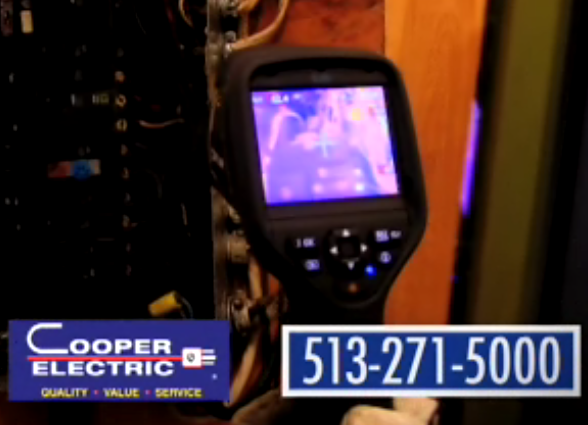
Picture 1 300x216 CurrentSAFE Testing   Thermography A thermographic inspection is used to detect thermal defects. The inspector uses an infrared camera to conduct scans of your electrical system in all other aspects of your home. If this is your first time hiring a thermographic inspector, you may not know what to expect. The following should give you some ideas as to what is involved with process, as well as how to prepare your home or office for the inspector's arrival.

How to Prepare Your Home

Before your thermographic inspector arrives. You should also move any large furniture away from the walls and electrical outlets so that the inspector can get to them.

The Thermographic Inspection

The inspector will arrive and will most likely educate you about your home or office and the scan itself. Some inspectors take the home owner or office manager along with them during the scans so that they can educate along the way, and some prefer to work slowly and in private so that all anomalies can be identified. During the process, the thermographic inspector will scan every inch of your home. The infrared camera or video will reveal heat as bright white for the warmest temperatures. Likewise, ambient or room temperatures, will show up as darker colors on the spectrum. This thermographic inspection will find problems with your wiring, malfunctioning appliances and equipment. These issues may not be seen by the naked eye, but the infrared equipment finds it and identifies it with ease.

Source: http://cooper-electric.net/currentsafe-testing-thermography/

residential electrician electrician company electrician tools

Freezers & Dedicated Circuits

I have heard many a horror story of someone who went off for vacation and came home to a freezer full of some very spoiled meat in their freezer in the garage. Nearly everyone I know has a secondary freezer or refrigerator in their garage. The code requires that receptacles in garages have GFCI protection. [...]

Source: http://blog.atselectricinc.com/2012/08/freezers-dedicated-circuits-7/

electrical repairs electrical installations electrical certification electrical inspection electrical maintenance

Using Wall Lights To Highlight Your Home’s Decor

If you have filled your San Gabriel Valley home with treasures and artifacts that you would love to display to guests and visitors, perhaps the installation of some well-placed wall lights could be the solution to all your problems. With a number of unusual and attractive designs available, lights that are installed on the walls of your home could be very beneficial in accentuating a picture, fireplace, nook, plant or other architectural element.

But why are wall lights so useful in highlighting the decorative features of our home? For one, they are known for being highly suited to the provision ambient lighting, which looks nice but isn’t overly useful for completing tasks by. For two, the way in which light is cast out from these fixtures is perfect for illuminating decorative elements that are placed on or around the walls of your home.

In the bathroom, it is essential that you have proper lighting installed by your San Gabriel Valley Lighting electrician, so that you can complete the daily tasks of shaving and applying makeup. Wall sconces, when fitted with the proper globes, are highly effective at casting a more natural appearing illumination across the space. They also avoid the creation of dark shadows, which can make a person appear tired or unwell.

In the dining room, wall lights are used to provide that finishing touch by adding an understated illumination to the walls (which are often left in shadow by ceiling fixtures). They are quite useful in making a space feel bright and cozy rather than dark and dingy, which makes for a much more pleasant dining experience.

In the living room, the correct sort of illumination is essential for setting the mood of your ‘relaxation space’. Wall sconces are widely used in these areas for drawing attention to particular elements of the room, such as a fireplace or a picture, and they are also suitable for lighting around the television without casting an annoying glare across the screen.

In the hallway, it is important that you get the amount of light right, as these rooms are renowned for being the darkest areas of the home. Well-spaced wall lights will effortlessly provide adequate illumination that really opens the space up and banishes those dark corners.


Source: http://www.accurateelectricalservices.com/CA-Electrician/lighting/wall-lights-highlight-homes-decor

electrical installation contractors electric electric contractors

Santa Monica Electrician – Hiring an Emergency Electrician

Something could go wrong with your electrical system at any time. Whether you experience an issue with your wiring system, or an error that has occurred as a result of an appliance or other gadget, it is important to leave these important repairs to a professional. Rather than risking your life trying to fix a complex electrical issue on your own, you should take full advantage of the 24/7 emergency electrical services in your area. Most electricians, including The Electric Connection, offer emergency service 24 hours a day, 7 days a week.

You may need to call on an electrician in Santa Monica at odd hours for a variety of reasons. Natural disasters, poor wiring, overloaded circuits or appliance malfunctions are some of the most common reasons that electrical systems stop working properly. In certain circumstances, these events can make your home and electrical system unsafe until an electrician has solved the problem. In other emergency events, loss of power could lead to a potentially dangerous or uncomfortable situation, depending on the weather and special considerations such as medical equipment and food storage. If you feel that your electrical issue is an emergency, don’t hesitate to call your Santa Monica Electrician.

While you may be somewhat apprehensive at first, hiring an emergency electrician is normally just as easy as hiring one during normal hours. Simply call the office, or a special 24/7 emergency line, and describe your problem. Before you know it, someone will be out to inspect and fix your electrical system. While you are waiting, resist the urge to tinker with the electronics yourself. Doing so could lead to further damage or even injury. For fast, certified and professional emergency services, don’t hesitate to call The Electric Connection. We’re always available to help out during an electrical emergency.

Source: http://www.theelectricconnection.com/santa-monica-electrician-hiring-emergency-electrician/

electrical estimating licensed electricians residential electrician electrician company electrician tools

Generators in High Demand on East Coast

Hurricane Sandy left many without power, but generators can light the way. Electricity from the utility company is great, that is until something interrupts it and it goes out. Power outages can be troubling and even life threating, so don't get caught without a backup generator system of some type to keep the power flowing. Backup generators come in many different styles. There are generators that connect to PTO drives on tractors, portable generators that run on gas, diesel, or propane, and others that connect more permanently to serve as a whole-house backup that run on propane or natural gas.

Generators are in great demand in the hurricane-stricken East Coast.

Read More...

Source: http://electrical.about.com/b/2012/11/04/generators-in-high-demand-on-east-coast.htm

general contractor electrical supply electrical engineer

How Long To Grow Tomatoes – Juicy Delicious Tomatoes

Ketchup is just one by product that you can get from tomatoes. And the fresher it gets better it is. To give you freshly picked tomatoes, you might want to learn how to start growing them. But instead of just learning how long to grow tomatoes, it is ideal to learn the essentials on how to care for them as well. There are only a few rules to follow so better start learning them for you to reap the rewards of fresh harvest in no time.

Click Here For Juicy Delicious Tomatoes Instant Access Now!

As have said earlier, there are only a few basic steps in trying to grow your own tomatoes. And depending on how well you take each aspect in consideration, it will pretty much determine how long to grow tomatoes. You can always ask your neighbors if you seem to lack such information or you can find yourself a guide that you can now find online these days.

One of the things you might want to have in order to produce the best tomatoes is the proper lighting. As a matter of fact, the more you expose your crops to sunlight, the better they are going to get. However, make sure not to place them in a place where wind is abundant.

Another thing to consider is the soil you are planning to plant your tomatoes in. The best thing to do is to sterilize your soil from time to time. It is recommended to do so twice every season. What is important is that your soil is free from various infections or diseases that could affect your plants.

It is also important to keep your soil moist at most times. These are just some of the things to consider. Why learn how long to grow tomatoes if you could only learn the best ways to care for them instead. Doing so will surely get you there – an unlimited supply of fresh tomatoes.

Click Here For Juicy Delicious Tomatoes Instant Access Now!

-
About the Author:
This author writes about Tomato Planting Tips at Juicy Delicious Tomatoes
Article Source

share save 171 16 How Long To Grow Tomatoes   Juicy Delicious Tomatoes

Source: http://reschelectrical.com/how-long-to-grow-tomatoes-juicy-delicious-tomatoes/

commercial electric electric contractor contractor electric electrician job electricians jobs

How to Pick A San Gabriel Valley Generator for Your Home

San Gabriel Valley generators are your run-to when there are power interruptions. Not having enough electricity could really make it hard for a household to work as normally as it would want, and this is why it’s important that you choose a generator that is most compatible for your home and your energy requirements. What should you consider when choosing a home generator?

  1. Price. When choosing a generator, you should consider just how much you could spend. Even if you really need a generator, it wouldn’t do you much good to spend money that you couldn’t earn. Portable home generators could cost as much as $4,000, but there would be others which could just cost less than $1,000 too. Decide on your budget before everything else.
  2. Size. What type of generator should you use? There are portable generators which are normally small. Home standby generators are used to power up a whole home in case it is needed. And there are those commercial generators which could power up a place a lot bigger than just a house. The size could usually tell you how long a generator can run too.
  3. Fuel Type. There are many types of generators depending on what fuel they use to generate electricity. There are those which are powered by gas, there are those powered by LPG, there are some that works on diesel, and others work on natural gas. There are advantages and disadvantages of choosing one over the other, including price and availability, and you should figure out about them with your professional contractor. We are the only ones who could help you choose the right San Gabriel Valley generators, as well as help you install them safely and properly.
  4. Load. Of course, you’d have to deal with choosing a home generator by the electricity load that you’re about to put into it. Knowing just how much wattage something needs to start and keep running is important if you want to know how powerful you need your generator to be. Make a list of all the things you want to start and run with a power generator, and make sure that you cover all the necessary appliances and equipment first. Your fridge, freezer, heater, pump and water system, gas furnace and fans, stove, lighting, washing machine, radio, computer system and many others could very well be considered as important and necessary. All of these things would require higher starting wattages, but all of them would run on significantly lower wattage.

If you’re thinking about installing a home generator by yourself, then you might want to take a step back and think twice about what you’re about to do. It could be very dangerous to deal with things that you don’t have much knowledge about. If you know a thing or two about generators, decide if they’re enough to help you safely and properly install it in your home. If you’re having second thoughts, it would always be better to have generators installed by your professional San Gabriel Valley electrician.

Source: http://www.accurateelectricalservices.com/CA-Electrician/electrical-upgrades/pick-san-gabriel-valley-generator-home

electrical certification electrical inspection electrical maintenance

Saturday, November 10, 2012

Electrician Santa Monica – What Are Electrical Circuits?

An electrical circuit is the necessary pathway required to provide power to your appliances, gadgets and electronics. Each circuit is a closed loop system that is formed by wires, a power source, load, a switch and some sort of circuit protection. The electricity flows from the power source, into the circuit and ultimately into the object that it is plugged into. After the electricity has provided the necessary power to the device, it then flows back to the original electrical source, allowing the circuit to keep the electrical current flowing in a smooth manner. There are three different types of electrical circuits: the parallel circuit, the series circuit and the series-parallel circuit.

How Do They Work?

An electrician in Santa Monica installs an electrical panel that is then broken into several circuits that provide power to your home. Whenever you plug a device into an electrical outlet, or flip a switch, you are accessing electricity that is flowing through that particular circuit. By plugging in or flipping a switch, you are essentially completing the circuit. This allows power to flow freely from the positive terminal of the power source, through the wire, and back to the negative terminal. This allows us to provide on-demand electricity to our light bulbs, televisions, appliances and other electronics.

Types of Circuits

The simplest type of circuit is the series circuit, because it provides only one possible path for electrical current. If this circuit is broken at any point along this path, none of the devices on the circuit will work. A parallel circuit, on the other hand, contains more than one path for electrical current. If one of the paths is broken, electricity can still flow to other portions of the circuit. A series-parallel circuit combines these two circuit types. Some portions of the circuit are parallel, and some are attached in series. If one of the series circuits breaks, it will shut off power to anything in that circuit. If a parallel circuit breaks, all other parallel circuits will continue to function as normal.

As an electrician Santa Monica, The Electric Connection installs and maintains electrical circuits on a daily basis. For more information, or questions about our services, visit our main website at www.theelectricconnection.com/electrician-santa-monica-ca.

Source: http://www.theelectricconnection.com/electrician-santa-monica-electrical-circuits/

electrician apprenticeship electrician contractors electrical testing commercial electrical electrical commercial

Landscape Lighting

Low voltage landscape lighting is an easy and cost effective way of providing dramatic lighting effects in your outdoor spaces and significantly enhance the beauty of your home. These systems have come a long way from the original tiered “pagoda” fixtures, with many styles, materials and power options to choose from. Fixtures with photovoltaic cells [...]

Source: http://blog.atselectricinc.com/2012/08/landscape-lighting-9/

electrical works electrical repairs electrical installations

GFCI Outlets Need Periodic Testing Too


GFCI outlets offer a great electrical safety barrier between you and the supply of electricity in your home. By installing these GFCI outlets in your home according to the instructions, you have a better chance of them functioning properly. However, you should also follow the periodic testing of these devices to ensure they remain functioning optimally throughout the years to come.

...

Read Full Post

Source: http://electrical.about.com/b/2012/10/23/gfci-outlets-need-periodic-testing-too.htm

electrical training electrician apprenticeship electrician contractors electrical testing commercial electrical

Political Economy 101: Some Quotations to Ponder

The recent election is reason to step back and examine the dangerous institution of politics and why it needs to be a small part of everyday life. Two very wise men said as much long ago. Voltaire (in 1764): “In general, the art of government consists in taking as much money as possible from one party of the citizens to give to the other.” Bastiat (in 1848): “The State is the great fiction through which everyone endeavors to live at the expense of everyone else.”

And to the 20th century and H. L. Menken (in 1924) who likened ”a good politician, under democracy” to ”an honest burglar.”

And now for two 21st century observations, one from on-high and the other from the ground:

“When government undertakes tasks for which it is ill equipped it squanders the authority necessary for carrying out its core responsibilities. Pervasive rent-seeking, bad for our economy and worse for our republic, should be discouraged instead of rewarded. If government becomes integral to securing every advantage and assuaging every grievance, then governance becomes impossible.” (Richard Voegeli)

“I’m not looking to be loved [as New Jersey governor]. I get plenty of love at home—and when you’re looking for love in this job, that’s when deficits get run up.” (Chris Christie)

Thomas Sowell

Here are some salient quotations from the Marxian-turned-free-market-economist Thomas Sowell (1930–):

“No one will really understand politics until they understand that politicians are not really trying to understand our problems. They are trying to understand their own problems–of which getting elected and re-elected are number one and number two. Whatever is number three is far behind.”

“The government is indeed an institution, but ‘the market’ is nothing more than an option for each individual to choose among numerous existing institutions, or to fashion new arrangements suited to his own situation and taste.”

“One of the most pervasive political visions of our time is the vision of liberals as compassionate and conservatives as less caring.”

James Buchanan

And some insight from the Nobel Laureate in economics, James Buchanan (1919–):

“Public choice [economics] rejects the notion that the state is wiser than individuals.”

“Government policy emerges from a highly complex and intricate institutional structure peopled by ordinary men and women, very little different from the rest of us.”

“’I can’t figure out if people are bitching about the market because it works or because it doesn’t work’.” (a favorite quotation from my teacher Frank Knight)

“How would the U.S. be different today if people coming off the boat were greeted with a welfare check instead of a shovel?”

… And a Few More

“The influence of special interests is now at an extremely unhealthy level. And it’s to the point where it’s virtually impossible for participants in the current political system to enact any significant change without first seeking and gaining permission from the largest commercial interests who are most affected by the proposed change.” (Al Gore)

“When buying and selling are controlled by the legislature, the first thing to be bought and sold is legislators.” (P. J. O’Rourke)

“To act on a behalf of a group seems to free people of many of the moral restraints which control their behavior as individuals within the group.” (F. A. Hayek)

And how about some naivity from Mr. Government himself? “These are decisions [on loan subsidies] … are made by the Department of Energy. They have nothing to do with politics.”

Readers are invited to add their own favorite worldview political quotations in the comments section.

Source: http://www.masterresource.org/2012/11/political-quotations/

general contractor electrical supply electrical engineer

‘Trends Can Change’: Ludwig von Mises (1951) Speaks to Us Today

“[T]rends of evolution can change, and hitherto they almost always have changed. But they changed only because they met firm opposition. The prevailing trend toward … the servile state will certainly not be reversed if nobody has the courage to attack its underlying dogmas.”

- Ludwig von Mises (see below)

Statism won at the top of the ticket earlier this week–and many places beneath. Limited-government advocates are feeling low and wondering if the dependency vote can be overcome in future elections to turn fiscal crises into new opportunities for economic freedom.

Small consolation: the Libertarian Party’s Gary Johnson beat the Green Party’s Jill Stein by a landslide. But the small parties combined received less than two million votes. Johnson’s 1.2 million votes–about 1.2 percent in the 48 states where he was on the ballot–compared to 400,000 for Stein. [1]

But think back to most of the last century where central economic planning was the orthodoxy. If you were not a socialist, you were a Keynesian. It was hard for even the greatest of the great free-market economists, including the author of the excerpt below, to get university appointments.

And don’t forget how a Cornell economist got in trouble with his department over his assigned reading of F. A. Hayek’s The Road to Serfdom in 1946.   F. A. “Baldy” Harper went on to help found the Foundation for Economic Education in that year and went on to found the Institute for Humane Studies, now at George Mason University.

Feeling low the day after the election, I left the public policy world and began reading a book on the legendary football coach at the University of Texas, Darrell K. Royal. He had many memorable quotations, and one struck me as pertinent given another four years of Obama. Royal said back in 1966:

“Defeat comes from within. There is no such thing as defeat, except in no longer trying …. It is when an individual admits down deep in his heart that he has had all he wants that he becomes defeated. As long as he still fights and has not given up, there is still a chance.”

Just hours later I heard that Coach Royal died at age 88 in Austin, Texas (New York Times obit here).

Trends Can Change!

Now to the wisdom of Ludwig von Mises that he penned more than sixty years ago against the Marxian doctrine of historical determinism against capitalism.

One of the cherished dogmas implied in contemporary fashionable doctrines is the belief that tendencies of social evolution, as manifested in the recent past, will prevail in the future too. Study of the past, it is assumed, discloses the shape of things to come. Any attempt to reverse or even to stop a trend is doomed to failure. Man must submit to the irresistible power of historical destiny….

In the last decades there prevailed a trend toward more and more government interference with business. The sphere of the private citizen’s initiative was narrowed down. Laws and administrative decrees restricted the field in which entrepreneurs and capitalists were free to conduct their activities in compliance with the wishes of the consumers as manifested in the structure of the market. From year to year an ever-increasing portion of profits and interest on capital invested was confiscated by taxation of corporation earnings and individual incomes and estates.

“Social” control, i.e., government control, of business is step by step substituted for private control. The “progressives” are certain that this trend toward wresting “economic” power from the parasitic “leisure class” and its transfer to “the people” will go on until the “welfare state” will have supplanted the nefarious capitalistic system which history has doomed forever. Notwithstanding sinister machinations on the part of “the interests,” mankind — led by government economists and other bureaucrats, politicians, and union bosses — marches steadily toward the bliss of an earthly paradise.

The prestige of this myth is so enormous that it quells any opposition. It spreads defeatism among those who do not share the opinion that everything which comes later is better than what preceded, and are fully aware of the disastrous effects of all-around planning, i.e., totalitarian socialism. They, too, meekly submit to what, the pseudo-scholars tell them, is inevitable. It is this mentality of passively accepting defeat that has made socialism triumph in many European countries and may very soon make it conquer in this country too….

‘Inevitability’ of Statism

The Marxian dogma of the inevitability of socialism was based on the thesis that capitalism necessarily results in progressive impoverishment of the immense majority of people. All the advantages of technological progress benefit exclusively the small minority of exploiters. The masses are condemned to increasing “misery, oppression, slavery, degradation, exploitation.” No action on the part of governments or labor unions can succeed in stopping this evolution. Only socialism, which is bound to come “with the inexorability of a law of nature,” will bring salvation by “the expropriation of the few usurpers by the mass of people.”

Facts have belied this prognosis no less than all other Marxian forecasts. In the capitalist countries, the common man’s standard of living is today incomparably higher than it was in the days of Marx. It is simply not true that the fruits of technological improvement are enjoyed exclusively by the capitalists while the laborer, as the Communist Manifesto says, “instead of rising with the progress of industry, sinks deeper and deeper.”

Not a minority of “rugged individualists,” but the masses, are the main consumers of the products turned out by large-scale production. Only morons can still cling to the fable that capitalism “is incompetent to assure an existence to its slave within his slavery.”

Today the doctrine of the irreversibility of prevailing trends has supplanted the Marxian doctrine concerning the inevitability of progressive impoverishment…. But even if it were true that a historical trend must go on forever, and that therefore the coming of socialism is inevitable, it would still not be permissible to infer that socialism will be a better — or even more than that, the most perfect — state of society’s economic organization. There is nothing to support such a conclusion other than the arbitrary pseudo-theological surmises of Hegel, Comte, and Marx, according to which every later stage of the historical process must necessarily be a better state….

Now trends of evolution can change, and hitherto they almost always have changed. But they changed only because they met firm opposition. The prevailing trend toward what Hilaire Belloc called the servile state will certainly not be reversed if nobody has the courage to attack its underlying dogmas.

—————-

This article, originally published in The Freeman (February 12, 1951), is excerpted from Ludwig von Mises, Planning for Freedom (1952). Mises (1881–1973) is considered the dean of modern Austrian-School Economics.

—————-

[1] Among third-party Presidential candidates, Libertarian Gary Johnson received approximately 1.1 million votes, great than all other third-party candidates combined. Green Party candidate Jill Stein received around 400,000 votes. For more information, see here.

Source: http://www.masterresource.org/2012/11/trends-can-change-mises/

electrical repairs electrical installations electrical certification electrical inspection electrical maintenance

Electrician Santa Monica – What Are Electrical Circuits?

An electrical circuit is the necessary pathway required to provide power to your appliances, gadgets and electronics. Each circuit is a closed loop system that is formed by wires, a power source, load, a switch and some sort of circuit protection. The electricity flows from the power source, into the circuit and ultimately into the object that it is plugged into. After the electricity has provided the necessary power to the device, it then flows back to the original electrical source, allowing the circuit to keep the electrical current flowing in a smooth manner. There are three different types of electrical circuits: the parallel circuit, the series circuit and the series-parallel circuit.

How Do They Work?

An electrician in Santa Monica installs an electrical panel that is then broken into several circuits that provide power to your home. Whenever you plug a device into an electrical outlet, or flip a switch, you are accessing electricity that is flowing through that particular circuit. By plugging in or flipping a switch, you are essentially completing the circuit. This allows power to flow freely from the positive terminal of the power source, through the wire, and back to the negative terminal. This allows us to provide on-demand electricity to our light bulbs, televisions, appliances and other electronics.

Types of Circuits

The simplest type of circuit is the series circuit, because it provides only one possible path for electrical current. If this circuit is broken at any point along this path, none of the devices on the circuit will work. A parallel circuit, on the other hand, contains more than one path for electrical current. If one of the paths is broken, electricity can still flow to other portions of the circuit. A series-parallel circuit combines these two circuit types. Some portions of the circuit are parallel, and some are attached in series. If one of the series circuits breaks, it will shut off power to anything in that circuit. If a parallel circuit breaks, all other parallel circuits will continue to function as normal.

As an electrician Santa Monica, The Electric Connection installs and maintains electrical circuits on a daily basis. For more information, or questions about our services, visit our main website at www.theelectricconnection.com/electrician-santa-monica-ca.

Source: http://www.theelectricconnection.com/electrician-santa-monica-electrical-circuits/

construction electrician able electric auto electrical repair

Corbett @ Philamuseum.org town hall, Sept. 19th, 2012

Join me next Wednesday, to let Corbett know that Pennsylvanians want a sustainable energy supply and sustainable jobs that are safe for us today, and that will preserve our ecosystem and natural resources for use tomorrow. This means radical rethinking on regulation and fees for hydraulic fracture drilling for shale gas, and renewed commitments to supporting renewable energy investment here in Pennsylvania.

Old-guard energy money talks, but organized people alive to their own and their children’s interests, together with a nacent renewables industry, still can talk louder.

Town Hall Meeting registration page by Eventbrite

Licensed Electrician Robert Monk Corbett @ Philamuseum.org town hall, Sept. 19th, 2012 Copyright Robert Monk, 2012

Source: http://www.phillylicensedelectrician.com/corbett-philamuseum-org-town-hall-sept-19th-2012/

electrical construction electrical works electrical repairs electrical installations electrical certification

Friday, November 9, 2012

What YOU Can Do to Reduce Pollution?

What YOU Can Do to Reduce Pollution?


The U.S. Environmental Protection Agency has prepared this fact sheet to answer some of the most common questions about reducing emissions from private vehicles.


This is an important concern, as cars are a major source of air pollution in the United States. Vehicle emissions contribute to health and environmental problems such as urban smog, air toxics, and global warming. Yet individual driving habits make a big difference in the amount of pollution a car produces.


Three easy things you can do to help keep emissions as low as possible are:


• Avoid unnecessary driving

• Maintain your car properly

• Drive your car wisely


By combining these strategies, you can very effectively reduce the amount your car pollutes. And there are additional benefits — your car will last longer and you will save money.


Avoid Unnecessary Driving

The most effective way to reduce emissions from your vehicle is to use it less.

Vehicle travel in this country is doubling every 20 years. Traffic trends that see

more and more cars driving more and more miles will soon begin to outpace

technological progress in vehicle emission control.


Several options are available to help you reduce the amount you drive. These

include consolidating trips, telecommuting, carpooling, using public transit, and choosing clean transportation alternatives such as biking or walking.

By planning errands, you will get the most out of time you do spend behind the wheel. For example, call ahead to confirm that the product you need is in stock before you drive to the store. Plan to do several tasks when you go somewhere.


Drive to a central location and park. Then walk between nearby destinations.

Ridesharing can be an ideal way to reduce your personal contribution to pollution.


Every time you share a ride and eliminate a trip, you help the environment. Try pairing up for trips to work or to social events — even an occasional carpool or ride on public transportation will make a difference.


Biking or walking to your destination creates no pollution at all. And you’ll

increase your fitness level at the same time.

-
About the Author:
<p>RunGreenPower.com will teach you how to build solar &amp; wind power systems foryour home within a weekend.</p><p>Check It Now: <a rel=”nofollow” onclick=”javascript:_gaq.push(['_trackPageview', '/outgoing/article_exit_link']);” target=”_blank” href=”http://www.rungreenpower.com/2010/09/21/buy-diy-solar-power-kit/”>Why to Buy DIY solar power Kit?</a></p>
Article Source

share save 171 16 What YOU Can Do to Reduce Pollution?

Source: http://reschelectrical.com/what-you-can-do-to-reduce-pollution/

contractor electrician electrician electrical contractor journeyman electrician

Improve Lighting Without Spending Much Money or Time

I am often amazed by the things some home builders due to shave just a few dollars out of the construction costs of a new home. In our home, we have nice brass chandeliers at the entry and dining area and similar wall mount brass lighting fixtures in the hallways. On the ceilings of the [...]

Source: http://blog.atselectricinc.com/2012/10/improve-lighting-without-spending-much-money-or-time-2/

electrician training master electrician electrical business electrical technician master electricians